
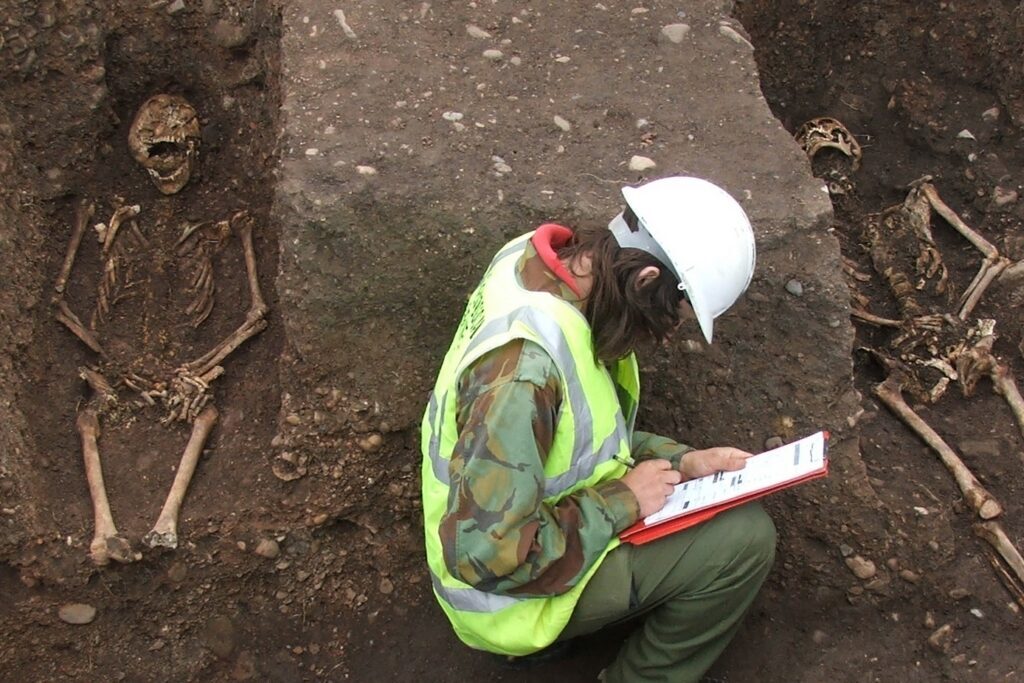
What is Fieldwork?
Fieldwork is undertaking study away from the classroom. It is a methodology which can be used by learners and researchers across many disciplines (Pole and Hillyard, 2016). There are several types of fieldwork:
- Field excursion: In its simplest form, activities are carried out away from the classroom. A field excursion is often used to develop students’ social skills and expose them to new experiences. There may not be an educational element to the activity. For example, taking international students to Beamish Museum to enable them to experience life in the North East whilst giving them opportunities to practice their English.
- Field trip: A field trip is often used to give context to theoretical learning and can be a visit to a historical site, museum or other location to simply observe and experience the place, people or activity. This may result in a report or reflection of the visit.
- Field research: The main aim of field research is to collect data or investigate a topic. This can be done to gather qualitative data (observing, interviewing) or quantitative data (readings, counts, surveys). Field research can involve total immersion, for example spending time observing the behaviour of chimpanzees in the wild and collecting tracking data over a significant period of time.
Why do Fieldwork?
There are many benefits of using fieldwork for all levels of study. Different types of fieldwork required different levels of interaction by learners and researchers.
- Real-world Experience: It engages learners with location-based learning and provides an opportunity to experience the physical world working on real projects with real outcomes.
- Data Collection: It enables timely, purposeful, data collection, e.g. botanist identifying plant species at a specific location.
- Contextual Experience: Fieldwork enables learners to relate their classroom study to physical environments providing an opportunity to aid understanding. Many concepts are difficult to learn from images and text alone for example museum studies students engaging with handling collections.
- Develops Higer-order Thinking Skills: It promotes curiosity and critical thinking. It can also promote creativity, for example an engineer visiting the site of a new bridge will take inspiration from the location and use this with engineering principles to design the bridge.
- Develops Subject related Practical Skills: Fieldwork allows learners to practice skills, for example interview and observational skills by anthropologists or excavation skills by archaeologists.
- Develops Interpersonal Skills: Fieldwork also enables learners to develop soft skills such as communication and teamwork needed in order to conduct their research.
Tool / Software option
Alongside applications such as Microsoft Excel and Access which are useful for recording data, Blackboard and FeedbackFruits have tools which can be used to support fieldwork and group fieldwork.
- Blackboard’s Journal tool can be used to enable field researchers to reflect on their activities over time. Entries made via this tool can only be seen by the learner and their tutor.
- FeedbackFruits is useful for creating peer feedback activities when a group of students are involved in fieldwork.
- Collaborative tools such as Microsoft Teams can be used to create shared workspaces and communication tools.
Practical tips and considerations
In addition to the tools needed to carry out the fieldwork, there are many other considerations and procedures which must be followed in advance of the fieldwork commencing.
- Practical considerations may need forward planning. Where is the fieldwork to be conducted? Is permission required from the landowner. How will the researcher get to the location, transportation and accommodation may be costly.
- Ethical considerations will need approval before the fieldwork commences.
- What type of data needs to be collected and how will this be done? Often notebooks and pens with camera equipment may be needed as remote sites may lack phone or internet signals.
- Students new to fieldwork may need support to complete the activity. Pre-fieldwork activities will help to develop skills needed during the site visit and good supervision during the visit will help alleviate problems.
- After the visit, follow up sessions and/assessment will help to reinforce the experience for the students or researchers.

Tips for accessibility and inclusion
- Ensure the site of the visit has been fully assessed for accessibility and students fully briefed about the site.
- Provide students with pre-visit materials, these could include a virtual visit, photographs, notes and details of activities that they will carry out on the day.
- During the fieldwork activity, ensure students have access to suitable ways of recording such as notebook and pen. Be mindful that technology may be used but no access to internet or wifi may be an issue.
Yorke et al. (2022) provides further details on accessibility and inclusion on field trips.
Further information
How-to guide
Resources
Case study
A number of projects at Durham are outline on the Collaborative Innovation Grants page.
Enhancing Fieldwork (2024) list a number of other case studies worth reading from other organisations.
References
- ENHANCING FIELDWORK. (2024). ‘Case Studies’. 21/10/2024. Available from: https://enhancingfieldwork.org.uk/case-studies/ [Accessed 13/03/2026].
- POLE, C. & HILLYARD, S. (2016). ‘What is Fieldwork?’. In: Doing Fieldwork. London: Sage Publications Ltd. pp. 1–18. Available: https://methods.sagepub.com/book/mono/doing-fieldwork/chpt/1-what-is-fieldwork [Accessed: 05/03/2026]
- YORKE, L., HUTCHINSON, S. & HURRELL , L. (2022). ’10 ways to make fieldwork more inclusive and accessible: a guide for educators’. Available at: https://pure.bangor.ac.uk/ws/portalfiles/portal/70783381/10_Ways_To_.pdf [Accessed 13/03/2026].